뉴질랜드 > 맛집·카페
뉴질랜드 양고기 고르는 법과 굽는 법: 램·호깃·머튼 차이, 부위 영어, 온도·시간
뉴질랜드 마트 정육 코너에서 양고기를 사려는데 Lamb, Hogget, Mutton 같은 이름과 Rack, Rump, Backstrap 같은 부위 이름이 낯설게 느껴지실 수 있습니다. 이 글에서는 세 등급의 차이, 부위별 영어 이름과 어울리는 조리법, 포장에서 보이는 Quality Mark의 뜻, 오븐에 굽는 시간과 속 온도 기준, 다짐육을 안전하게 익히는 법을 한 번에 정리했습니다. 수치는 뉴질랜드 소·양고기 업계 단체인 Beef + Lamb New Zealand(B+LNZ)와 뉴질랜드 1차산업부(MPI) 자료를 기준으로 했고, 확인일은 2026년 9월 30일입니다.
뉴질랜드 양고기, 어떤 고기인가요
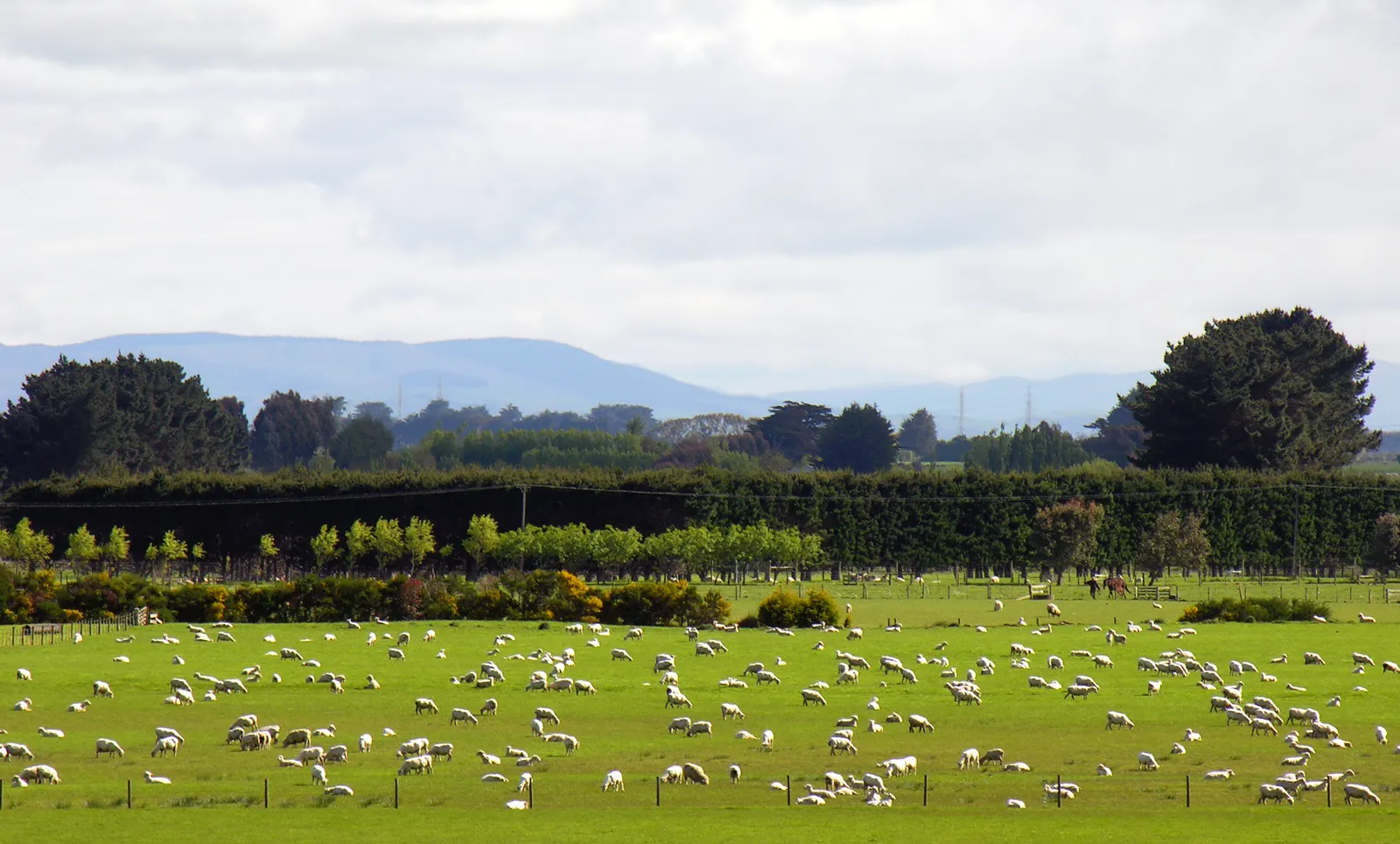
B+LNZ는 뉴질랜드 양고기를 목초를 먹고(grass-fed) 풀어 키운(free-range) 고기로 소개합니다. 양고기는 단백질, 아연, 비타민 B12, 철분을 채워 주는 식품으로 안내되며, B+LNZ는 뉴질랜드 보건 당국 권장을 인용해 조리한 기름기 적은 붉은 고기를 일주일에 350~500g, 한 끼 100~150g씩 3~4끼 정도로 먹도록 소개합니다. B+LNZ NZ Lamb
Lamb, Hogget, Mutton 차이
마트에서 가장 많이 보는 것은 Lamb이지만, 정육점이나 농장 직판에서는 Hogget과 Mutton도 볼 수 있습니다. 세 이름은 양의 성숙도를 나눈 것이고, 나이는 영구 앞니(permanent incisor)가 몇 개 났는지로 판단합니다. 아래 표는 B+LNZ가 펴낸 참고 자료(Beef + Lamb New Zealand Reference Guide)의 '뉴질랜드 양 분류' 쪽을 따랐습니다. B+LNZ Reference Guide (PDF)
| 이름 | B+LNZ 가이드 기준 | 가이드의 용도 안내 |
|---|---|---|
| Lamb (램) | 생후 12개월 미만이거나 영구 앞니가 하나도 없는 어린 양 | 테이블 컷(구이·로스트용 부위)에 좋은 고기 |
| Hogget (호깃, two-tooth) | 영구 앞니가 2개 이하인 어린 양. 이 앞니는 보통 생후 12~15개월 무렵에 납니다 | 테이블 컷에 좋은 고기 |
| Mutton (머튼) | 거세 숫양(wether)이나 암양(ewe)으로 영구 앞니가 더 많은 양. 가이드는 앞니 4개를 Four-tooth mutton, 6개 이상을 Mutton으로 나눕니다 | 스튜나 가공용에 더 맞고, 다리와 로인은 테이블 컷으로도 쓸 수 있음 |
이 정의는 2020년에 온라인으로 공개된 업계 자료 기준입니다. 수출 분류 등에서는 영구 앞니가 닳기 시작했는지(in wear)를 기준으로 삼는 표현도 쓰이니, 세부 문구는 자료마다 조금 다를 수 있습니다. 영어권 일반 설명은 Wikipedia: Lamb and mutton을 보조로 참고하시면 됩니다.
정리하면 굽거나 로스트할 고기라면 Lamb이나 Hogget, 카레나 스튜처럼 오래 끓일 요리라면 Mutton도 후보가 됩니다. 정육점에서는 "Is this lamb or hogget?"(이거 램인가요, 호깃인가요?)라고 물어보시면 됩니다.
포장에서 Quality Mark 보는 법
뉴질랜드 소고기·양고기 포장에서 Quality Mark 표시를 볼 수 있습니다. B+LNZ에 따르면 이 표시는 1997년에 만들어졌고, 다음 기준을 갖춘 고기에만 붙습니다. B+LNZ The Quality Mark
- 뉴질랜드에서 기른 고기일 것
- 풀어 키웠고(free range), 성장 호르몬(HGP)을 쓰지 않았을 것
- 연도(부드러움), 식품 안전, 동물 복지 기준을 통과할 것
- 부위의 겉지방을 최대 5mm까지만 남기고 손질할 것
- 다짐육(mince)은 지방이 10% 미만일 것
가공·도매업체는 평균 연 1회 이상, 소매점은 연 최대 2회 감사를 받는다고 안내합니다. 겉지방이 너무 두꺼운 고기를 피하고 싶다면 이 표시를 기준으로 고르시면 편합니다.
한 가지 알아 두실 점이 있습니다. 2020년에 공개된 B+LNZ 참고 자료에 따르면 양고기 중 Quality Mark를 받을 수 있는 것은 Lamb과 Hogget이고, Mutton은 대상에서 빠집니다. 그래서 Mutton 포장에 이 표시가 없다고 품질이 낮다는 뜻은 아닙니다. B+LNZ Reference Guide (PDF)
부위 영어 이름과 추천 조리법
B+LNZ는 예를 들어 촙(chop)과 갈비는 그릴에, 레그와 섕크는 천천히 브레이즈하면 잘 맞는다고 소개합니다. B+LNZ NZ Lamb 다만 아래 표와 다음 절처럼 레그는 오븐 로스트나 바비큐가 대표적이고, 브레이즈도 할 수 있는 부위라고 보시면 됩니다. 부위 설명과 조리법은 B+LNZ가 운영하는 레시피 사이트 안내를 따랐습니다. recipes.co.nz 양고기 부위 안내
| 마트 표기 | 어떤 부위인가요 | 추천 조리법 |
|---|---|---|
| Lamb backstrap | 척추 옆 로인 가운데 살. 지방·힘줄·뼈가 없음 | 팬이나 그릴에 빠르게. 기름기가 적어 오래 익히면 퍽퍽해집니다 |
| Lamb fillet (cannon, loin) | 랙 가운데 살. 소고기 안심에 해당 | 아주 빠르게 익혀 레어로 |
| Lamb rack / Frenched rack | 갈비 6~8대. 프렌치드는 뼈의 살을 깨끗이 긁어낸 것 | 통째로 짧게 오븐 로스트해 미디엄레어로, 또는 잘라서 촙으로 |
| Lamb rump | 다리 윗부분의 뼈 없는 네모난 살. 한 덩이 2~3인분 | "미니 로스트". 핑크로 익히고 윗면 지방은 바삭하게 |
| Lamb leg (bone-in, boneless, butterflied) | 가장 활용도가 높은 다리 살 | 통 로스트, 펼친 버터플라이 레그는 바비큐, 스테이크·케밥 |
| Lamb shoulder | 마블링이 좋고 단맛이 도는 기름진 부위 | 저온 로스트나 브레이즈로 살이 흐트러질 때까지 |
| Lamb shank | 다리 관절 아래 부분 | 천천히 오래 익히기. 겨울에 인기 |
| Lamb flap (ribs, belly) | 질기고 저렴한 부위 | 오래 익히는 요리 |
| Lamb mince | 다짐육 | 버거·미트볼. 속까지 완전히 익히기 |
처음이시라면 조리가 빠르고 실패가 적은 럼프나 백스트랩부터, 특별한 날에는 랙, 여럿이 먹을 때는 레그나 숄더 로스트 순으로 시도해 보시길 권합니다. 정육점에서 쓸 만한 표현도 몇 가지 적어 둡니다.
- "Could I get a lamb rump, please?" — 램 럼프 하나 주세요.
- "Could you butterfly the leg for me?" — 다리살을 펼쳐 손질해 주실 수 있나요?
- "How many people does this serve?" — 이거 몇 인분인가요?
레그 오븐 로스트 시간 기준
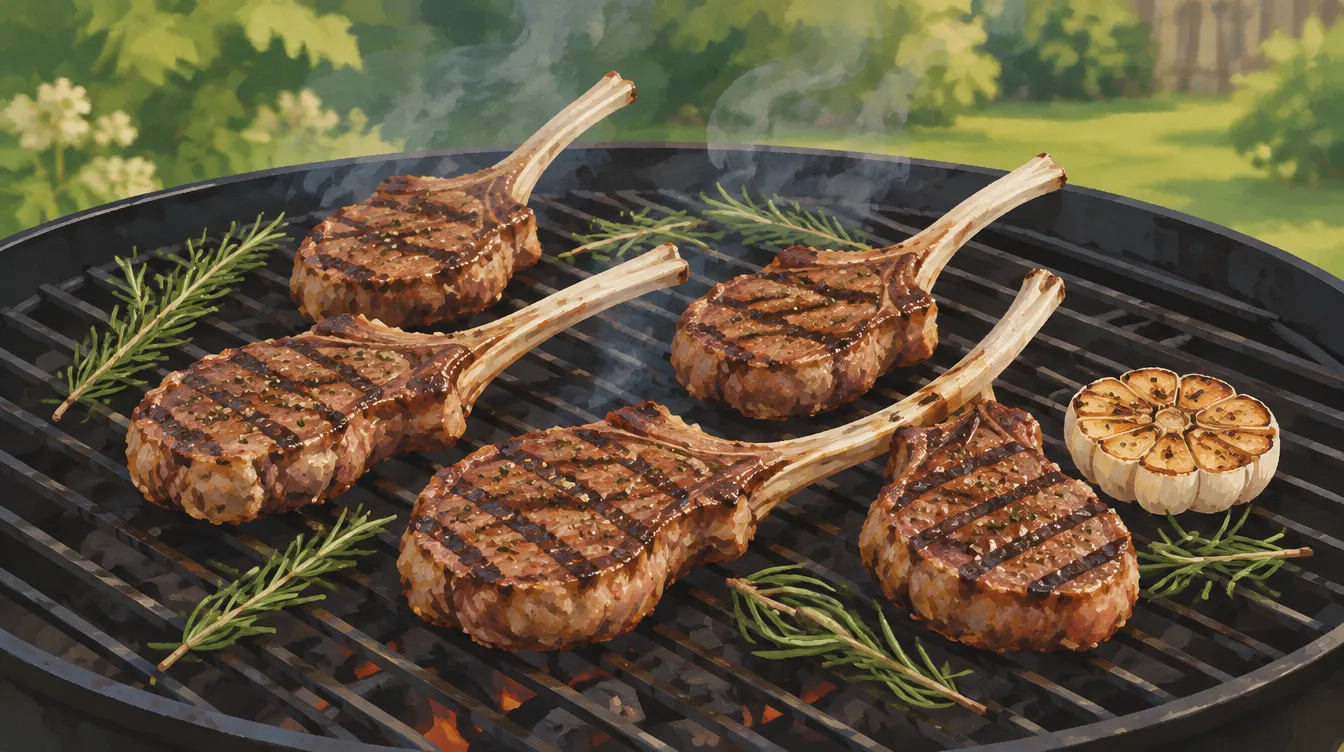
B+LNZ 레시피 사이트의 레그 굽는 법 안내는 다음 순서를 제시합니다. How to cook a lamb leg
- 굽기 60분 전에 냉장고에서 꺼내 고르게 익도록 합니다.
- 오븐을 180°C로 예열합니다.
- 500g당 미디엄레어 25분, 미디엄 30분을 기준으로 굽습니다. 예를 들어 2kg 레그를 미디엄으로 굽는다면 약 2시간입니다.
- 다 구운 뒤 15~20분 쉬게(rest) 한 뒤 자릅니다.
같은 페이지는 버터플라이 레그를 바비큐에 굽는 법도 안내합니다. 직화에서 한 면당 5~6분 굽고, 간접 불로 옮겨 뚜껑을 덮고 두께에 따라 25~35분 익힌 다음, 10분 쉬게 하고 결 반대로 썹니다. 촙이나 스테이크, 로스트 모두 굽기 전에 실온에 두고 굽고 나서 쉬게 하는 것이 기본입니다. B+LNZ NZ Lamb
속 온도는 출처별로 다릅니다
온도계를 쓰시면 가장 정확합니다. 다만 B+LNZ 자료 안에서도 페이지마다 목표 온도가 조금씩 다르게 적혀 있어, 한 숫자로 합치지 않고 출처별로 나눠 적습니다. 첫 열은 B+LNZ의 NZ Lamb 페이지와 레시피 사이트 부위 안내 페이지 두 곳에 똑같이 실린 기본값입니다.
| 굽기 정도 | B+LNZ 기본값 | 레그 로스트 페이지 | 온도·시간 가이드의 로스트 문단 | 같은 가이드의 굽기 정도 목록 |
|---|---|---|---|---|
| 베리레어·레어 | 50°C | - | - | 50~60°C |
| 미디엄레어 | 55°C | 55~60°C | 55°C | 60~65°C |
| 미디엄(핑크) | 60°C | 60~65°C | 60°C | 65~70°C |
| 미디엄웰 | 65°C | - | - | 70~75°C |
| 웰던 | 72°C | - | - | 75°C 이상 |
출처: B+LNZ NZ Lamb, 부위 안내, 레그 로스트, 온도·시간 가이드
처음이시라면 미디엄레어 55°C, 미디엄 60°C를 기본으로 잡으세요. 레그를 통째로 로스트할 때는 레그 페이지 범위(미디엄레어 55~60°C, 미디엄 60~65°C)를 쓰시면 됩니다. 마지막 열인 굽기 정도 목록은 미디엄레어를 60~65°C로 적는 등 다른 B+LNZ 자료보다 한 단계 높게 나와 있어 어긋나는 값이니, 참고만 하세요. 온도는 가장 두꺼운 부분에서 재고, 쉬는 동안에도 조금 더 익는다는 점을 감안하세요.
촙·숄더·섕크 굽는 요령
같은 온도·시간 가이드는 조리법별 요령도 알려 줍니다. recipes.co.nz 온도·시간 가이드
- 두꺼운 촙: 바비큐에 불이 센 쪽과 약한 쪽을 나눕니다(two-zone). 약한 쪽에서 먼저 익히고, 센 쪽에서 한 면당 1~2분씩 겉을 굽습니다. 얇은 촙은 센 불에서 빠르게 굽습니다.
- 숄더·섕크 브레이즈: 소금을 뿌리고 겉을 구운 뒤, 국물과 향신 채소를 넣고 뚜껑을 덮어 뭉근히 끓입니다. 2~3시간이면 포크로 갈라질 만큼 부드러워집니다. 스튜로 만들려면 중간에 뿌리채소를 넣습니다.
- 리버스 시어(두꺼운 로스트): 하룻밤 소금을 발라 두고, 130°C 오븐에서 두께에 따라 1~2시간, 가장 두꺼운 부분이 45~50°C가 될 때까지 익힙니다. 그다음 센 불로 겉을 노릇하게 구워 55°C에 맞춥니다.
다짐육은 속까지 완전히 익히세요
위의 핑크빛 굽기는 통고기 이야기이고, 다짐육은 사정이 다릅니다. MPI는 고기를 다지면 겉의 세균이 속까지 섞인다며, 양고기 버거나 소시지 같은 다짐육 제품은 속까지 완전히 익히도록 안내합니다. 온도계가 있다면 가장 두꺼운 부분이 75°C에서 30초, 70°C에서 3분, 65°C에서 15분 유지되어야 하고, 온도계가 없다면 육즙이 맑게 나오고 속까지 뜨거워질 때까지 익힙니다. MPI 가정 식품 안전
MPI의 다른 기본 수칙도 함께 기억해 두세요.
- 날고기는 씻지 않습니다. 물이 튀면서 세균이 싱크대 주변으로 퍼집니다.
- 해동은 실온이 아니라 냉장고나 전자레인지로 합니다.
- 남은 음식은 2시간 안에 냉장하거나 냉동합니다.
- 냉장고 온도는 2~5°C로 유지합니다.
장보기 전 체크리스트
- 굽기·로스트는 Lamb·Hogget, 오래 끓일 요리면 Mutton도 후보에 넣기
- 겉지방과 원산지가 신경 쓰이면 Lamb·Hogget 포장의 Quality Mark 확인하기(Mutton은 대상 아님)
- 빠른 요리는 rump·backstrap·rack, 오래 익히는 요리는 shoulder·shank
- 레그 로스트는 180°C, 500g당 25~30분, 굽고 나서 15~20분 쉬기
- 다짐육 버거·소시지는 속까지 완전히 익히기
가격과 할인 품목은 마트마다, 시기마다 달라서 이 글에는 적지 않았습니다. 장보기 전에 각 마트 온라인몰에서 확인해 보세요. 뉴질랜드 소고기를 고르는 법이 궁금하시다면 스테이크 가이드도 함께 참고하시면 좋습니다.
사진 출처
- 뉴질랜드 사우스랜드의 넓은 목초지에서 풀을 뜯는 양…: Phillip Capper, CC BY 2.0, 원본 — 크기 조정·WebP 변환
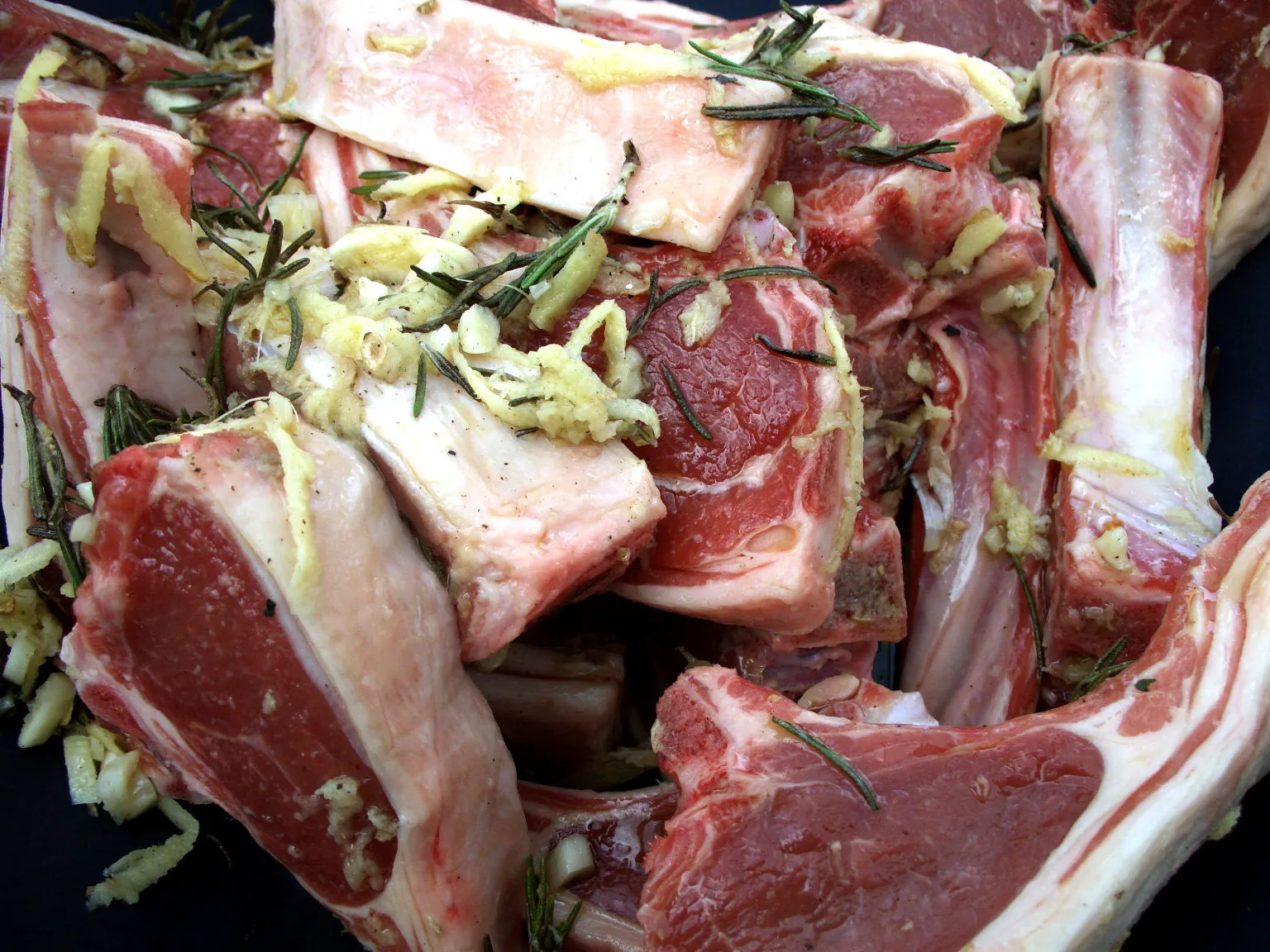
- 생강채, 마늘, 로즈메리로 밑간한 굽기 전 양갈비…: Salimfadhley, CC BY-SA 3.0, 원본 — 크기 조정·WebP 변환
Read in English
How to Choose and Cook New Zealand Lamb: Lamb vs Hogget vs Mutton, Cuts, Temperatures and Times
Buying lamb at a New Zealand supermarket means decoding labels like Lamb, Hogget and Mutton, and cut names such as rack, rump and backstrap. This guide covers the difference between the three, the English names of each cut and how best to cook them, what the Quality Mark on the pack means, oven times and internal temperatures, and how to cook mince safely. Figures come from Beef + Lamb New Zealand (B+LNZ), the industry body for New Zealand beef and lamb, and the Ministry for Primary Industries (MPI), checked on 30 September 2026.
What makes New Zealand lamb
B+LNZ describes New Zealand lamb as grass-fed and free-range. Lamb is presented as a source of protein, zinc, vitamin B12 and iron, and B+LNZ cites New Zealand health guidance of 350–500g of cooked lean red meat a week, spread over three to four meals of 100–150g. B+LNZ NZ Lamb
Lamb, hogget and mutton
Supermarkets mostly sell lamb, but butchers and farm shops may also offer hogget and mutton. The three names describe the sheep's maturity, and age is judged by how many permanent incisor teeth it has. The table follows the New Zealand sheep classification in B+LNZ's reference material, the Beef + Lamb New Zealand Reference Guide. B+LNZ Reference Guide (PDF)
| Name | B+LNZ guide definition | What the guide says it suits |
|---|---|---|
| Lamb | A young sheep under 12 months of age, or without any permanent incisor teeth | Quality meat for table cuts (roasting and grilling cuts) |
| Hogget (two-tooth) | A young sheep with no more than two permanent incisors, which usually appear at about 12–15 months | Quality meat for table cuts |
| Mutton | A wether (castrated male) or ewe with more permanent incisors; the guide calls four incisors four-tooth mutton and six or more mutton | Better suited to stewing or manufacturing, though legs and loins can make table cuts |
These definitions come from industry material published online in 2020. Export classification and other contexts may also describe the cut-off in terms of whether the permanent incisors are "in wear", so the exact wording varies between sources. For a general English overview, Wikipedia: Lamb and mutton is a useful secondary reference.
In short, choose lamb or hogget for grilling and roasting, and consider mutton for long-cooked curries and stews. At the butcher, just ask: "Is this lamb or hogget?"
Reading the Quality Mark
You will see the Quality Mark on some New Zealand beef and lamb packs. According to B+LNZ, it was established in 1997 and is only given to meat that meets these standards: B+LNZ The Quality Mark
- Grown in New Zealand
- Free range and free of hormone growth promotants (HGPs)
- Meets standards for tenderness, food safety and animal welfare
- Cuts trimmed to a maximum of 5mm external fat
- Mince containing less than 10% fat
Processors and wholesalers are audited on average at least once a year, and retailers up to twice a year. If you want to avoid heavily fatty cuts, the mark is a handy shortcut.
One thing to note: according to B+LNZ's reference material published in 2020, lamb and hogget can qualify for the Quality Mark, but mutton is excluded. So a mutton pack without the mark is not a sign of lower quality. B+LNZ Reference Guide (PDF)
Cut names and how to cook them
B+LNZ gives the example that chops and ribs are perfect on the grill, while legs and shanks suit a slow braise. B+LNZ NZ Lamb As the table and the next section show, though, leg is most often oven-roasted or barbecued, with braising as another option. The cut descriptions below follow B+LNZ's recipe site. recipes.co.nz lamb cuts guide
| On the label | What it is | Best way to cook |
|---|---|---|
| Lamb backstrap | The centre of the loin beside the spine; no fat, sinew or bone | Quick pan-frying or grilling; it dries out if overcooked |
| Lamb fillet (cannon, loin) | The eye of the rack, like beef tenderloin | Cook very fast and serve rare |
| Lamb rack / Frenched rack | Six to eight ribs; Frenched means the bones are scraped clean | Short oven roast to medium-rare, or cut into cutlets |
| Lamb rump | A boneless square of meat from the top of the leg, serving two to three | A "mini roast"; serve pink with the fat cap crisped |
| Lamb leg (bone-in, boneless, butterflied) | The most versatile cut | Whole roast, butterflied on the barbecue, steaks or kebabs |
| Lamb shoulder | Well marbled, sweet and rich | Slow roast or braise until it falls apart |
| Lamb shank | The lower leg below the joint | Long, slow cooking; a winter favourite |
| Lamb flap (ribs, belly) | A tougher, budget cut | Long cooking |
| Lamb mince | Minced lamb | Burgers and meatballs; cook right through |
If this is your first time, start with rump or backstrap, which are quick and forgiving, then try a rack for a special occasion and a leg or shoulder roast for a crowd. A few handy phrases at the butcher:
- "Could I get a lamb rump, please?"
- "Could you butterfly the leg for me?"
- "How many people does this serve?"
Oven times for a leg roast
B+LNZ's leg guide gives these steps: How to cook a lamb leg
- Take the lamb out of the fridge 60 minutes before cooking so it cooks evenly.
- Preheat the oven to 180°C.
- Allow 25 minutes per 500g for medium-rare and 30 minutes per 500g for medium. A 2kg leg cooked to medium takes about two hours.
- Rest for 15–20 minutes before carving.
The same page covers a butterflied leg on the barbecue: sear over direct heat for 5–6 minutes a side, move to indirect heat, cover and cook for 25–35 minutes depending on thickness, then rest for 10 minutes and slice across the grain. Whether it is chops, steaks or a roast, bring the meat to room temperature before cooking and let it rest afterwards. B+LNZ NZ Lamb
Internal temperatures differ by source
A meat thermometer is the most reliable tool, but B+LNZ pages give slightly different targets, so rather than merging them into one number, here they are by source. The first column is the default list that appears word for word on both B+LNZ's NZ Lamb page and the recipe site's cuts guide.
| Doneness | B+LNZ default | Leg roast page | Temperature guide, roasting paragraph | Temperature guide, doneness list |
|---|---|---|---|---|
| Very rare / rare | 50°C | - | - | 50–60°C |
| Medium-rare | 55°C | 55–60°C | 55°C | 60–65°C |
| Medium (pink) | 60°C | 60–65°C | 60°C | 65–70°C |
| Medium-well | 65°C | - | - | 70–75°C |
| Well done | 72°C | - | - | 75°C and over |
Sources: B+LNZ NZ Lamb, cuts guide, leg roast, temperature and cooking times guide
If you are new to this, use 55°C for medium-rare and 60°C for medium. For a whole roast leg, use the leg page's ranges (55–60°C medium-rare, 60–65°C medium). The doneness list in the last column runs about one step higher than the other B+LNZ material (for example, 60–65°C for medium-rare), so treat it as an outlier. Measure in the thickest part, and remember the meat keeps cooking a little while it rests.
Chops, shoulder and shank
The same temperature guide also shares method tips: recipes.co.nz temperature guide
- Thick chops: set up a two-zone barbecue. Cook on the cooler side first, then sear on the hot side for 1–2 minutes a side. Thin chops go straight onto high heat.
- Braised shoulder or shank: salt, sear, add liquid and aromatics, cover and simmer. After 2–3 hours the meat is fork-tender. For a stew, add root vegetables halfway through.
- Reverse sear (thick roasts): dry-salt overnight, roast at 130°C for 1–2 hours depending on thickness until the thickest part reaches 45–50°C, then sear over high heat until it reads 55°C.
Cook mince all the way through
The pink doneness above applies to whole cuts; mince is different. MPI explains that mincing mixes surface germs right through the meat, so minced products such as lamb burgers and sausages must be cooked thoroughly. With a thermometer, the thickest part should reach 75°C for 30 seconds, 70°C for 3 minutes or 65°C for 15 minutes. Without one, cook until the juices run clear and the meat is piping hot. MPI food safety at home
Other MPI basics worth remembering:
- Don't wash raw meat; splashing spreads germs around the sink.
- Thaw in the fridge or microwave, not on the bench.
- Refrigerate or freeze leftovers within two hours.
- Keep your fridge at 2–5°C.
Shopping checklist
- Grilling and roasting: lamb or hogget. Slow-cooked dishes: consider mutton too
- Care about fat trim and origin: look for the Quality Mark on lamb and hogget (mutton is not eligible)
- Quick cooking: rump, backstrap, rack. Slow cooking: shoulder, shank
- Leg roast: 180°C, 25–30 minutes per 500g, then rest 15–20 minutes
- Mince burgers and sausages: cook right through
Prices and specials change by store and season, so they are not listed here; check each supermarket's online shop before you go. If you are also buying beef, our New Zealand steak guide is a good companion read.
Photo credits
- Phillip Capper, CC BY 2.0, source — resized and converted to WebP
- Salimfadhley, CC BY-SA 3.0, source — resized and converted to WebP
출처
- Beef + Lamb New Zealand — NZ Lamb
- Beef + Lamb New Zealand — The Quality Mark
- Beef + Lamb New Zealand Reference Guide (PDF, 2020년 온라인 게시) — 9쪽 New Zealand Sheep Classification, 20쪽 Quality Mark 대상
- recipes.co.nz (B+LNZ) — How to cook the best lamb (부위 안내)
- recipes.co.nz (B+LNZ) — How to cook a lamb leg
- recipes.co.nz (B+LNZ) — Lamb temperatures and cooking times
- MPI — Safe food preparation, cooking, and storage at home
- Wikipedia — Lamb and mutton (보조 참고)