낚시 이야기 > 장비 사용기
루어낚시 입문: 소프트베이트와 하드베이트 차이, 채비와 액션 주는 법
루어낚시는 생미끼 대신 물고기 모양이나 먹이의 움직임을 흉내 낸 인공 미끼로 포식성 물고기를 부르는 낚시입니다. 이 글을 읽으시면 소프트베이트와 하드베이트의 차이, 뉴질랜드 바다에서 소프트베이트를 시작할 때 쓰는 릴·합사·리더·지그헤드 기준, 포퍼·스틱베이트·미노우 같은 하드베이트 용어, 루어에 액션을 주는 기본 동작, 그리고 바다와 민물의 규정 차이(민물은 Fish & Game 면허, 타우포는 DOC 면허)를 한 번에 정리하실 수 있습니다. 장비 수치는 공식 단체 자료와 뉴질랜드 낚시 전문 매체의 입문 권장을 기준으로 했고, 확인일은 2026년 9월 30일입니다.
루어란 무엇이고, 왜 입문자에게 좋을까요
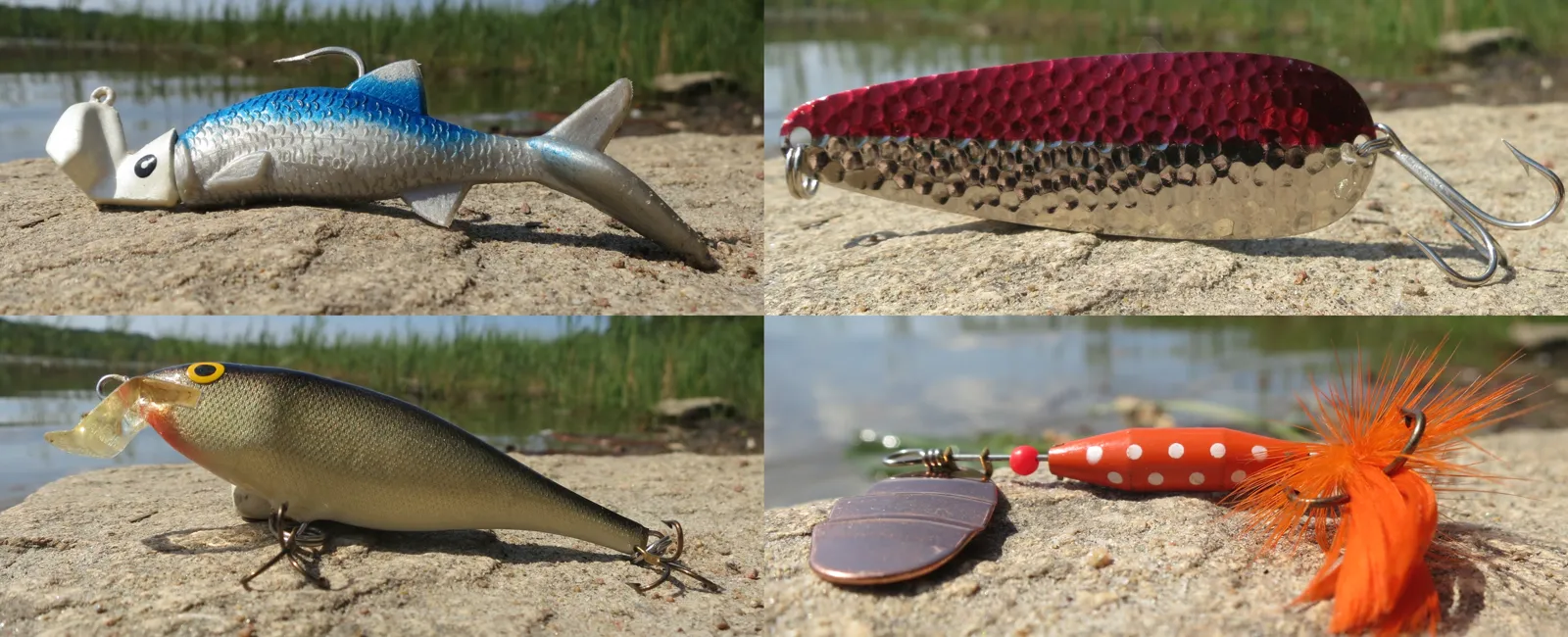
루어(lure)는 먹을 수 없는 인공 미끼입니다. 모양, 움직임, 진동, 색, 반짝임으로 물고기의 공격 본능을 자극합니다. 쓰는 방법은 크게 두 가지입니다. 던져서 감아 들이는 캐스팅(cast & retrieve)과, 배 뒤로 끌고 다니는 트롤링(trolling)입니다.
생미끼 낚시와 비교하면 루어낚시에는 이런 특징이 있습니다.
- 미끼를 사거나 보관할 필요가 없어 짐이 가볍습니다.
- 계속 던지고 감으며 포인트를 옮기기 때문에 넓은 곳을 빨리 탐색할 수 있습니다.
- 대신 루어를 움직이는 방법이 조과에 크게 영향을 줍니다. 그래서 "어떻게 움직이느냐"를 따로 익혀야 합니다.
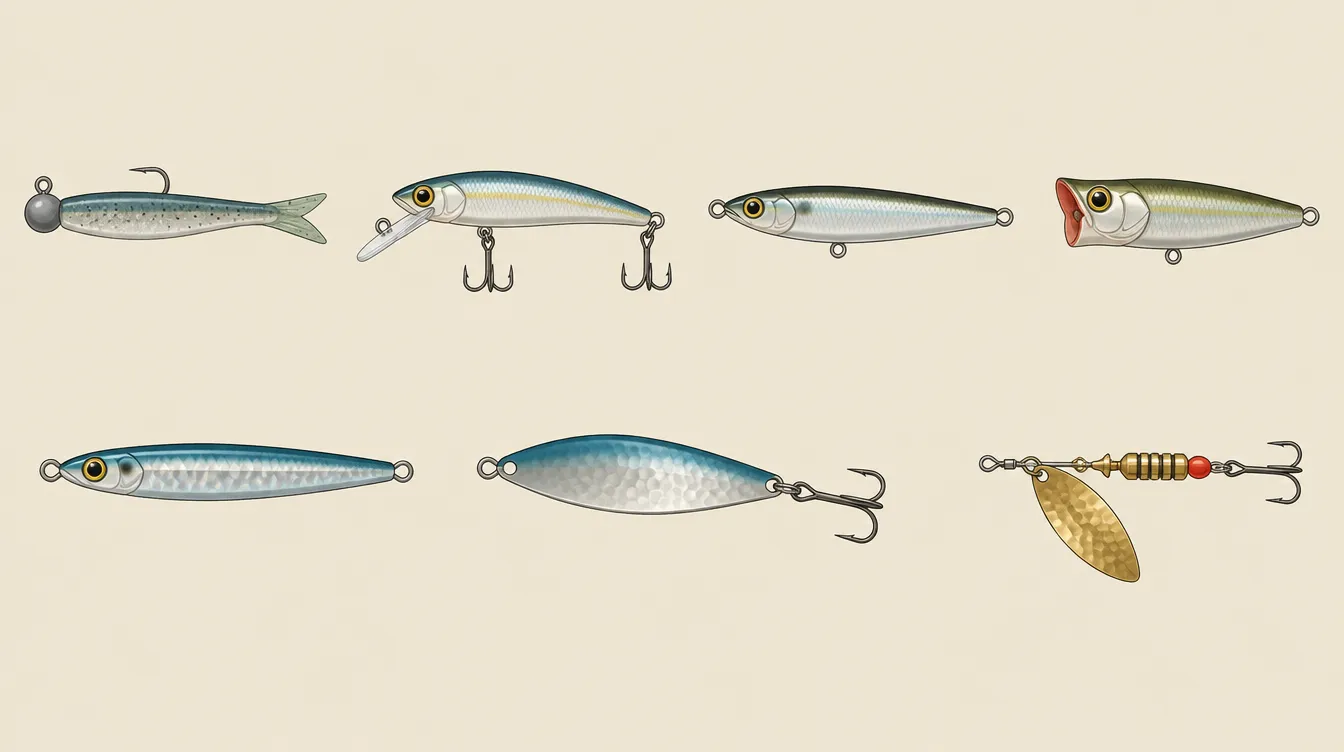
루어는 재질에 따라 크게 소프트베이트와 하드베이트로 나눕니다. 아래 표로 먼저 차이를 보시면 이후 내용이 쉽게 들어옵니다.
| 구분 | 소프트베이트 (softbait, soft plastic) | 하드베이트 (hard body lure) |
|---|---|---|
| 재질 | 말랑한 플라스틱·고무 | 딱딱한 플라스틱, 나무, 금속 |
| 채비 | 지그헤드(추가 달린 바늘)에 끼워 씀 | 바늘이 달린 완제품. 트레블훅(세발 바늘)이 많음 |
| 장점 | 움직임이 자연스럽고, 몸통만 교체하면 되어 부담이 적음 | 오래 쓰고, 수면·중층 공략과 비거리에 강한 종류가 많음 |
| 주의 | 물리면 쉽게 찢어짐 | 밑걸림으로 잃으면 비용이 큼. 트레블훅 취급 주의 |
| 대표 대상(바다, 예) | 예: 참돔(snapper) 등 바닥 근처 물고기 | 예: 카와이, 킹피시 등 표층·중층 회유어 |
바다 소프트베이트 입문 장비
뉴질랜드에서는 참돔을 노리는 소프트베이트 낚시가 입문 방법으로 널리 소개됩니다. 뉴질랜드 낚시 전문 매체 The Fishing Website의 입문 기사에 나온 권장을 정리하면 다음과 같습니다. 한 필자의 권장이므로, 고르실 때 출발점으로만 삼으세요.
| 항목 | 입문 권장 | 이유 |
|---|---|---|
| 로드 | 짧고 빳빳한 로드 | 긴 로드(8ft 전후)는 멀리 던지지만 다루기 어렵고, 짧고 빳빳해야 챔질(hook set)이 확실함. 필자 자신은 비거리 때문에 8ft를 쓰지만 입문 단계에는 짧고 빳빳한 로드를 권함 |
| 릴 | 3000~4000번 스피닝 릴 | 소프트베이트에 일반적인 크기 |
| 원줄 | 합사(braid) 10~20lb | 가늘고 감도가 좋음 |
| 리더 | 플루오로카본 2~3m (예: 20lb) | 합사는 바위·이빨에 쓸리면 약해서 끝에 리더를 덧댐 |
| 매듭 | 합사-리더: 올브라이트 노트 / 리더-루어: 레프티 루프 노트 | 기사에서 예로 든 매듭 |
| 지그헤드 | 처음엔 1온스(약 28g)로 시작 | 바닥에 닿는 느낌을 먼저 익히고, 익숙해지면 가볍게 줄임 |
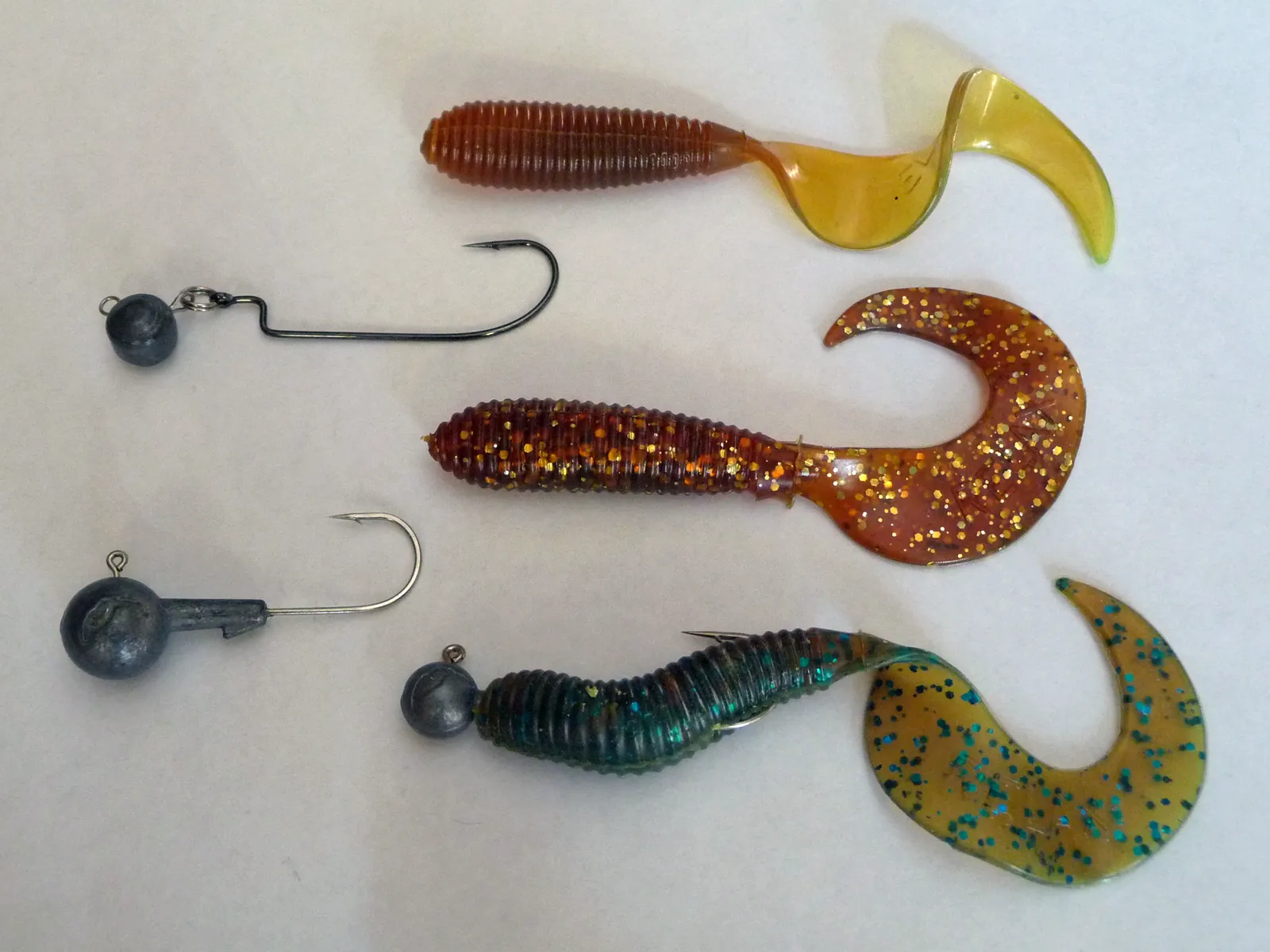
| 소프트베이트 | 5인치 물고기(섀드) 모양, 꼬리는 포크 테일 | 입질이 많은 크기. 큰 고기를 노리면 7인치. 필자는 패들 테일·컬리 테일보다 포크 테일(섀드)을 선호함 |
같은 기사는 처음부터 게나 새우 모양보다 단순한 물고기 모양을 권합니다. 조류나 바람이 있으면 가벼운 지그헤드는 바닥까지 내려가지 못한다는 점도 짚습니다. 그래서 "무겁게 시작해서 가볍게 줄인다"가 입문 순서입니다.
꼬리 모양도 여러 가지입니다. 꼬리가 휘어져 감을 때 팔랑거리는 트위스터(컬리 테일)형은 가게에서 흔히 보이고, 꼬리 끝이 넓적한 패들 테일도 있습니다. 다만 위 기사 필자는 입문에는 꼬리가 제비 꼬리처럼 갈라진 포크 테일 섀드를 권합니다. 고르기 어렵다면 포크 테일부터 시작하시면 됩니다.
수심과 자리 옮기기
같은 기사는 입문 수심으로 18~25m를 권합니다. 30m를 넘으면 조류와 바람 때문에 루어를 바닥까지 내리기 어려워집니다. 한 자리에서 5~10번 던져도 반응이 없으면 자리를 옮기라고 합니다. 루어낚시는 기다리기보다 찾아다니는 낚시라는 점을 기억하시면 좋습니다.
하드베이트 종류: 용어 표
하드베이트는 종류가 많아 이름부터 헷갈립니다. 아래는 대표적인 종류를 정리한 표입니다. 공식 단체가 정한 분류가 아니라 흔히 쓰는 용어이며, 제조사마다 부르는 이름이 조금씩 다릅니다.
| 이름 (영어) | 생김새 | 주로 쓰는 층 | 기본 움직임 |
|---|---|---|---|
| 미노우·플러그 (minnow, plug, crankbait) | 앞쪽에 립(lip·bill)이 달린 물고기 모양 | 중층 | 감으면 립이 물을 받아 좌우로 흔들리며 잠김. 립 크기·각도와 부력에 따라 잠기는 깊이가 다름 |
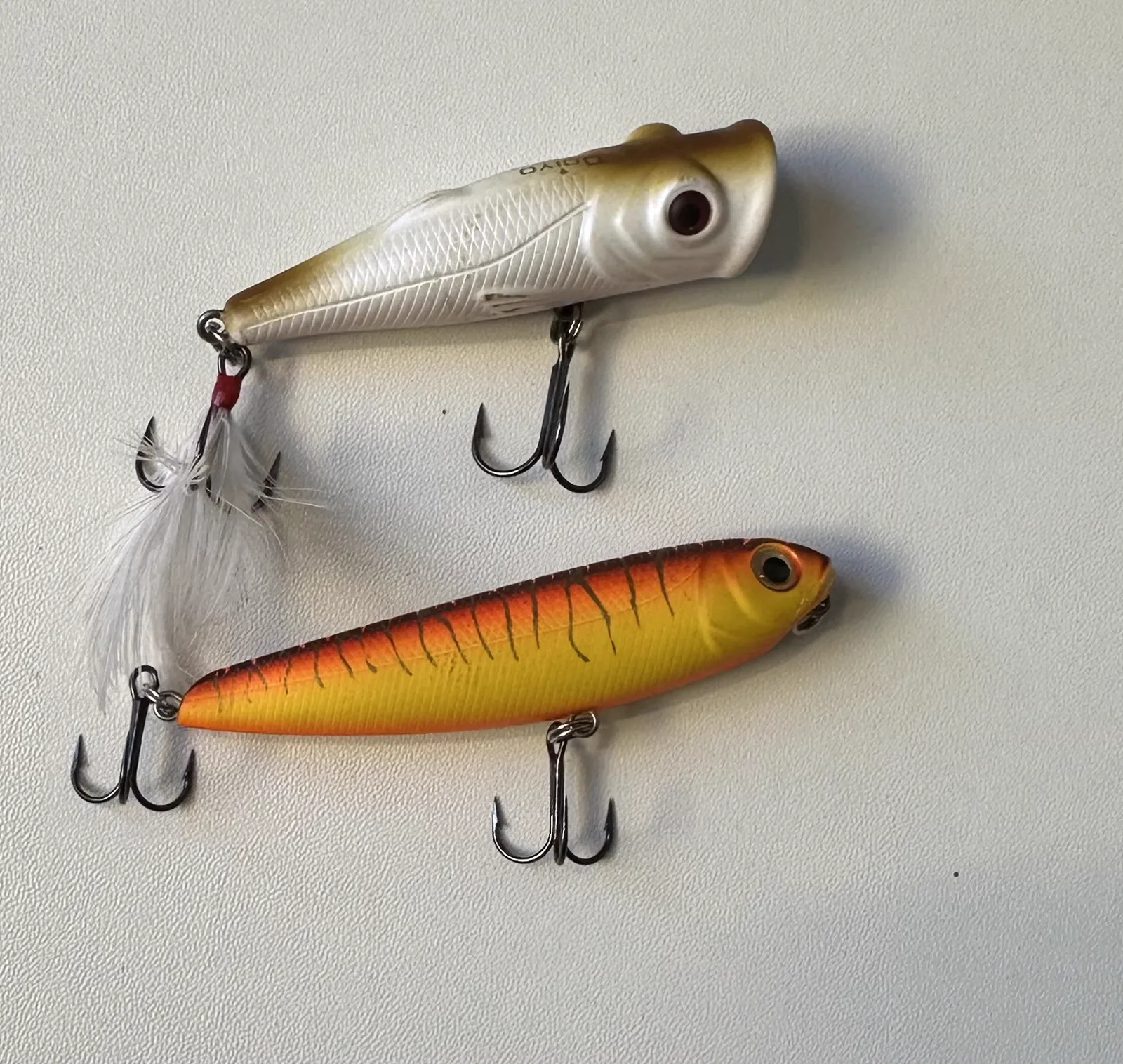
| 스틱베이트·펜슬 (stickbait, pencil) | 립이 없는 길쭉한 막대 모양 | 수면~중층 | 로드 끝을 톡톡 쳐서 좌우로 지그재그로 움직이게 함 |
| 포퍼 (popper) | 머리가 오목하게 파인 모양 | 수면 | 짧게 당기면 오목한 머리가 물을 튀기며 "퐁" 소리를 냄 |
| 메탈 지그 (metal jig, slice) | 무겁고 가는 금속 막대 | 바닥~중층 | 무게 덕에 멀리 날아가고 빨리 가라앉음. 위아래로 튀기며 씀 |
| 스푼 (spoon) | 숟가락처럼 휜 금속판 | 중층 | 감으면 비틀거리며 반짝임 |
| 스피너 (spinner) | 축에 회전 날개(블레이드)가 달림 | 중층 | 감으면 날개가 돌며 진동과 반짝임을 냄. 민물 송어에 흔함 |
참고로 지그(jig)는 무거운 머리에 바늘을 단 루어를 말합니다. 수평으로 움직이는 다른 루어와 달리 위아래로 튀는 움직임이 특징이고, 대부분 바닥이나 바닥 가까이에서 입질을 받습니다. 소프트베이트를 끼우는 지그헤드도 같은 원리입니다.
액션 주는 법: 네 가지 기본 동작
루어는 스스로 움직이지 않습니다. 낚시하는 사람이 로드와 릴로 움직임을 만들어 줘야 합니다. 입문 단계에서는 다음 네 가지를 익히시면 됩니다.
- 바닥 찍고 톡톡 (hop): 소프트베이트를 바닥까지 내린 뒤 로드를 살짝 들어 올렸다 내려 바닥에서 튀게 합니다. 앞의 기사는 가장 쉬운 방법으로, 배가 흘러가는 대로 루어를 끌며(drag) 바닥에서 톡톡 튀기는 방식을 소개합니다.
- 앞으로 던져 떨어뜨리기: 좀 더 익숙해지면 배가 흘러가는 방향 앞쪽으로 던지고, 줄을 팽팽히 유지한 채 루어가 떨어지게 합니다. 같은 기사에 따르면 입질은 루어가 떨어질 때나 바닥에 멈췄을 때 자주 옵니다. 배가 너무 빨리 흐르면 씨앵커(drogue)로 속도를 늦춥니다.
- 불규칙하게 감기: Fish & Game은 스핀 피싱 안내에서 일정한 속도로만 감지 말고 속도를 바꿔 가며 불규칙하게 감으라고 권합니다. 다친 물고기나 도망치는 물고기처럼 보이게 하려는 것입니다. 미노우·스푼·스피너에 잘 맞습니다.
- 로드 끝 튕기기 (twitch): 스틱베이트와 포퍼는 로드 끝을 짧게 쳐서 좌우로 흔들거나 물을 튀기게 합니다. 치고 나서 줄의 느슨함을 감아 들이는 리듬을 반복합니다.
입질이 오면 로드를 세게 들어 올려 챔질합니다.
드랙(drag)은 릴에서 일정한 힘 이상이 걸리면 줄이 풀려 나가게 하는 장치입니다. Fish & Game 스핀 피싱 안내는 드랙을 이렇게 맞추라고 합니다.
- 줄을 손으로 당겼을 때 툭툭 걸리거나 미끄러지지 않고 일정하게 풀려 나와야 합니다.
- 확인할 때 줄이 손을 파고들 만큼 너무 조이면 안 됩니다.
- 거의 저항이 없을 만큼 너무 풀어도 안 됩니다.
낚시를 시작하기 전에 한 번 당겨 보고 맞춰 두세요.
민물 루어낚시(스핀 피싱)는 면허부터
강이나 호수에서 송어 같은 스포츠 어종을 루어로 노리려면 Fish & Game 면허가 필요합니다. 바다와 가장 크게 다른 점입니다. Fish & Game은 나이와 관계없이 모두 유효한 면허를 지녀야 한다고 안내합니다. 어린이용 면허가 따로 있으니 요금과 종류는 Fish & Game 공식 페이지에서 확인하세요. 타우포(Taupō) 수역은 Fish & Game 면허가 아니라 DOC(자연보호부) 면허가 따로 필요합니다. DOC 면허에서 어린이는 7월 1일 기준 18세 미만을 말하며, 요금은 DOC 페이지에서 확인하세요.
Fish & Game은 스핀 피싱을 스피닝 로드와 스피닝 릴로 작은 물고기를 흉내 낸 루어를 던지는 방법이라고 설명합니다. 장비가 적고 경험이나 기술 부담이 작아 민물낚시 입문에 좋다고 소개합니다. 낚시점에서는 민물 스핀 피싱용이라고 꼭 말하라고도 합니다. 그래야 소프트베이트용 바다 스피닝 세트를 잘못 사는 일을 피할 수 있습니다. 안내 자료의 권장 장비는 다음과 같습니다.
| 항목 | Fish & Game 안내 |
|---|---|
| 로드 | 6'6"~7'(약 2m), 그래파이트, 가이드 6개 이상 |
| 원줄 | 합사 3~6lb 또는 6lb 이하 나일론 |
| 리더 | 원줄이 합사면 나일론 리더 3~4m를 이어 물고기가 합사를 덜 보게 함. 연결은 더블 유니 노트. 나일론 원줄이면 루어에 바로 묶어도 됨 |
| 루어 | 립 달린 미노우, 스푼, 블레이드 스피너. 무게 5~10g이 기준(수심에 따라 다름) |
| 운용 | 바닥 가까이, 속도를 바꿔 가며 감기 |
앞의 바다 소프트베이트 표(합사 10~20lb, 20lb 플루오로카본 리더)는 참돔용 권장입니다. 민물 송어에는 위처럼 훨씬 가는 줄과 나일론 리더를 쓰니, 두 표를 섞어 쓰지 않도록 주의하세요.
주의하실 점도 있습니다. 일부 수역은 플라이 낚시 전용이라 스피닝을 할 수 없습니다. 냄새가 나는 소프트 플라스틱은 미끼낚시가 허용된 곳에서만 쓸 수 있는 지역도 있습니다. 이런 규정은 지역마다 다르므로 면허와 함께 받는 규정집이나 Fish & Game 웹사이트에서 가려는 강·호수를 꼭 확인하세요.
바다 규정: 면허는 없지만 체장·마릿수는 지역별로 확인
바다낚시는 면허가 필요 없습니다. 대신 MPI(1차산업부)가 정한 최소 체장과 1일 마릿수 제한을 지켜야 하고, 이 기준은 수역마다 다릅니다. 예를 들어 MPI의 오클랜드·케르마덱 수역 규정(2026년 9월 30일 확인)에서 Auckland East 구역은 참돔 최소 30cm·1인 1일 7마리, 킹피시는 최소 75cm·3마리입니다. 카와이는 최소 체장이 없지만 1인 1일 어류 합계 제한(20마리) 안에서 셉니다. 규정은 바뀔 수 있으니 출발 전에 가려는 지역의 MPI 페이지나 MPI의 NZ Fishing Rules 앱으로 확인하세요.
MPI는 작은 고기가 계속 잡히면 더 큰 바늘과 미끼로 바꾸라고 권합니다. 루어라면 한 치수 큰 소프트베이트로 바꾸는 식입니다. 놓아줄 고기는 젖은 부드러운 곳에 두고, 가능하면 뜰채를 쓰세요.
안전과 매너
- 트레블훅은 손과 옷에 쉽게 박힙니다. 물고기를 뗄 때는 집게(플라이어)를 쓰세요.
- 놓아줄 생각이라면 트레블훅을 싱글훅으로 바꾸는 방법이 있습니다. Fish & Game은 이렇게 하면 물고기 손상이 줄고, 걸림률은 대부분 차이가 없다고 설명합니다.
- 던지기 전에 뒤와 옆에 사람이 없는지 꼭 확인하세요.
- 루어를 매단 채 로드를 세워 두면 바람에 흔들리다 바늘이 걸릴 수 있습니다. 쓰지 않을 때는 바늘을 가이드에 걸어 두세요.
바로 쓰는 영어 표현
| 상황 | 영어 |
|---|---|
| 소프트베이트 / 지그헤드 | softbait, soft plastic / jig head |
| 하드베이트 | hard body lure, stickbait, popper, metal jig, spinner |
| 감기 / 챔질 | retrieve / hook set |
| 드랙 / 리더 | drag / leader |
| 이 강에서 스피닝 해도 되나요? | Is spin fishing allowed on this river? |
| 이 크기 지그헤드면 바닥에 닿을까요? | Will this jig head weight get to the bottom here? |
정리: 처음 시작하는 순서
- 바다라면: 3000~4000번 스피닝 릴과 합사, 플루오로카본 리더를 준비합니다. 1온스 지그헤드에 5인치 섀드를 끼워 18~25m 수심에서 바닥을 찍고 톡톡 튀깁니다. 반응이 없으면 자리를 옮깁니다. 잡은 고기는 그 지역 MPI 체장·마릿수와 비교합니다.
- 민물이라면: Fish & Game 면허(타우포는 DOC 면허)를 나이와 관계없이 먼저 삽니다. 가려는 수역이 스피닝 허용인지 확인합니다. 가는 원줄(합사면 나일론 리더 3~4m)에 5~10g 스피너나 미노우를 달아 불규칙하게 감아 봅니다.
- 하드베이트는 그다음: 포퍼나 스틱베이트는 표층에서 물고기가 먹이를 쫓을 때 꺼내는 도구로 생각하시면 입문 단계의 선택이 쉬워집니다.
사진 출처
Read in English
Lure Fishing for Beginners: Softbaits vs Hard Body Lures, Rigging and Retrieves in New Zealand
Lure fishing means using an artificial bait that imitates a baitfish or the movement of prey, instead of natural bait, to trigger predatory fish. This guide covers the difference between softbaits and hard body lures, a starting setup for saltwater softbaiting in New Zealand (reel, braid, leader and jig head), the names of common hard lures such as poppers, stickbaits and minnows, the basic ways to work a lure, and how the rules differ between sea and freshwater (a Fish & Game licence for freshwater, and a separate DOC licence for Taupō). Gear figures come from official bodies and a beginner guide on a New Zealand fishing publication, checked on 30 September 2026.
What is a lure, and why start with one?
A lure is an inedible artificial bait. Its shape, movement, vibration, colour and flash provoke a strike. There are two main ways to use one: cast and retrieve, or trolling behind a boat.
Compared with bait fishing, lure fishing:
- needs no bait to buy or keep fresh, so you carry less;
- lets you cover water quickly, because you keep casting and moving;
- depends heavily on how you move the lure, so the retrieve is a skill in its own right.
Lures split broadly into softbaits and hard body lures.
| Softbait (soft plastic) | Hard body lure | |
|---|---|---|
| Material | Soft plastic or rubber | Hard plastic, wood or metal |
| Rigging | Threaded onto a jig head (weighted hook) | Ready-made with hooks, often trebles |
| Strengths | Natural movement; cheap to replace the body | Durable; many types excel on the surface, mid-water and for distance |
| Watch out | Tears easily when bitten | Costly to lose on snags; handle trebles with care |
| Typical sea targets (examples) | e.g. snapper and other near-bottom fish | e.g. kahawai, kingfish and other roaming fish near the surface |
A beginner saltwater softbait setup
Softbaiting for snapper is widely recommended as a way into lure fishing in New Zealand. The beginner guide on The Fishing Website suggests the following. It is one writer's recommendation, so treat it as a starting point.
| Item | Beginner suggestion | Why |
|---|---|---|
| Rod | Short and stiff | Longer rods (around 8ft) cast further but are harder to handle; a short stiff rod gives a firmer hook set. The writer uses an 8ft rod himself for distance, but suggests short and stiff for beginners |
| Reel | 3000–4000 size spinning reel | A common size for softbaiting |
| Main line | 10–20lb braid | Thin and sensitive |
| Leader | 2–3m of fluorocarbon (e.g. 20lb) | Braid is weak against abrasion from rocks and teeth |
| Knots | Braid to leader: Albright knot / leader to lure: Lefty's loop knot | Examples given in the guide |
| Jig head | Start with 1oz (about 28g) | Learn to feel the bottom first, then go lighter |
| Softbait | 5-inch baitfish (shad) shape with a fork tail | Gets plenty of bites; step up to 7-inch for bigger fish. The writer prefers fork tails (shads) over paddle and curly tails |
The same guide suggests a simple baitfish shape rather than crab or prawn patterns at first, and notes that a light jig head will not reach the bottom in current or wind. So the order is: start heavy, then go lighter.
Tails come in several styles. Twister (curly tail) softbaits, whose curved tail flutters on the retrieve, are common in shops, and there are paddle tails too. The guide's writer, though, recommends a fork-tail shad for beginners, so if you are unsure, start there.
Depth and moving on
The guide suggests 18–25m as an easy depth for beginners. Beyond 30m, current and wind make it hard to get a lure to the bottom. If five to ten casts produce nothing, move. Lure fishing rewards searching more than waiting.
Hard body lures: a glossary
Hard lures come in many styles. The table below uses common angling terms, not an official classification, and brands name them slightly differently.
| Name | Shape | Main depth | Basic action |
|---|---|---|---|
| Minnow / plug / crankbait | Baitfish shape with a lip (bill) at the front | Mid-water | The lip catches water on the retrieve, making it wobble and dive; lip size, angle and buoyancy set the depth |
| Stickbait / pencil | Long, lipless stick | Surface to mid-water | Twitch the rod tip to make it zigzag side to side |
| Popper | Cupped, concave face | Surface | Short pulls make the face splash and "pop" |
| Metal jig / slice | Heavy, slim metal bar | Bottom to mid-water | Casts far and sinks fast; worked up and down |
| Spoon | Curved metal blade | Mid-water | Wobbles and flashes on the retrieve |
| Spinner | Rotating blade on a shaft | Mid-water | The blade spins for vibration and flash; common for freshwater trout |
A jig is a lure with a heavy head and a hook. Unlike lures that move horizontally, it has an up-and-down, hopping action, and most fish take it on or near the bottom. A softbait jig head works on the same principle.
Four basic ways to work a lure
A lure does not move on its own; you create the action with the rod and reel. Start with these four.
- Hop along the bottom: Let the softbait reach the bottom, then lift and drop the rod so it hops. The guide describes the easiest method as dragging the lure behind a drifting boat and hopping it along the bottom.
- Cast ahead and let it fall: Once comfortable, cast ahead of the boat's drift and keep the line tight as the lure sinks. According to the guide, bites often come as the lure falls or when it rests on the bottom. If the boat drifts too fast, slow it with a drogue (sea anchor).
- Vary the retrieve: Fish & Game's spin fishing guide advises changing speed rather than winding steadily, so the lure looks like an injured or fleeing baitfish. This suits minnows, spoons and spinners.
- Twitch the rod tip: Stickbaits and poppers are worked with short flicks of the rod tip, then winding in the slack, in a steady rhythm.
When you feel a bite, lift the rod firmly to set the hook.
The drag lets line pay out once the pull passes a set force. Fish & Game's spin fishing guide says to set it like this:
- When you pull line off by hand, it should come off steadily, without slipping.
- It should not be so tight that the line cuts into your hand when you test it.
- Nor should it be so loose that there is barely any tension.
Give it a pull and adjust it before you start fishing.
Freshwater spin fishing: get a licence first
To target sports fish such as trout with lures in rivers and lakes, you need a Fish & Game licence. This is the biggest difference from the sea. Fish & Game states that everyone, of any age, must carry a valid licence. There are licences for children, so check the types and prices on the official Fish & Game website. The Taupō fishery needs a separate DOC (Department of Conservation) licence, not a Fish & Game one. For DOC licences, a child means someone under 18 on 1 July; check prices on the DOC page.
Fish & Game describes spin fishing as casting a lure that imitates a small fish with a spinning rod and spinning reel, and recommends it as a way into freshwater fishing that needs little gear, experience or technique. It also advises telling the tackle shop staff you want the rod for freshwater spin fishing, so you don't end up with a saltwater softbait outfit by mistake. Its guide suggests:
| Item | Fish & Game guidance |
|---|---|
| Rod | 6'6"–7' (about 2m), graphite, at least six guides |
| Line | 3–6lb braid, or nylon of 6lb or less |
| Leader | With braid main line, add a 3–4m nylon leader so fish are less likely to spot the braid, joined with a Double Uni Knot. With nylon main line you can tie straight to the lure |
| Lures | Lipped minnows, spoons and blade spinners, around 5–10g depending on depth |
| Technique | Fish near the bottom and vary the retrieve speed |
The saltwater softbait setup above (10–20lb braid, 20lb fluorocarbon leader) is a snapper recommendation. Freshwater trout call for much lighter line and a nylon leader, so don't mix the two tables.
Some waters are fly fishing only, so spinning is not allowed there. In some regions, scented soft plastics may only be used where bait fishing is permitted. These rules vary by region, so check your river or lake in the regulations guide issued with your licence or on the Fish & Game website.
Saltwater rules: no licence, but check size and bag limits by region
You do not need a licence to fish in the sea. You must follow MPI's (Ministry for Primary Industries) minimum sizes and daily bag limits, which differ by area. For example, MPI's Auckland and Kermadec rules (checked 30 September 2026) set snapper in the Auckland East area at a 30cm minimum and 7 per person per day, and kingfish at 75cm and 3. Kahawai have no minimum size but count towards the combined daily limit of 20 finfish. Rules can change, so check the MPI page for your area or MPI's NZ Fishing Rules app before you go.
MPI suggests switching to a bigger hook and bait if you keep catching small fish; with lures, that means stepping up a softbait size. Keep fish you plan to release on a wet, soft surface, and use a landing net where you can.
Safety and etiquette
- Treble hooks catch hands and clothing easily; use pliers to unhook fish.
- If you plan to release fish, consider swapping trebles for single hooks. Fish & Game says this reduces damage to the fish and mostly makes no difference to the hook-up rate.
- Check behind and beside you before every cast.
- A lure left dangling from a standing rod can swing and snag someone; hook it onto a guide when not in use.
Handy English phrases
| Situation | English |
|---|---|
| Softbait / jig head | softbait, soft plastic / jig head |
| Hard lures | hard body lure, stickbait, popper, metal jig, spinner |
| Retrieve / hook set | retrieve / hook set |
| Drag / leader | drag / leader |
| Asking about rules | Is spin fishing allowed on this river? |
| Asking about weight | Will this jig head weight get to the bottom here? |
Summary: where to start
- At sea: Rig a 3000–4000 spinning reel with braid and a fluorocarbon leader. Put a 5-inch shad on a 1oz jig head, fish 18–25m and hop it along the bottom. Move if nothing happens, and check any catch against MPI's size and bag limits for that area.
- In freshwater: Buy a Fish & Game licence first, whatever your age (a DOC licence for Taupō). Confirm spinning is allowed on your chosen water. Use light line (a 3–4m nylon leader if your main line is braid) and try a 5–10g spinner or minnow with a varied retrieve.
- Hard lures next: Think of poppers and stickbaits as tools for when fish are chasing baitfish on the surface, and early choices get much simpler.
Photo credits
출처
- Fishing lure — Wikipedia (루어 정의·사용 방법)
- Plug (fishing) — Wikipedia (립 달린 하드베이트)
- Jigging — Wikipedia (지그의 상하 동작)
- Softbaiting for beginners — The Fishing Website (로드·릴·합사·리더·지그헤드·크기·수심)
- Spin fishing how-to (Trout Fishing Made Easy) — Fish & Game NZ PDF
- Spin fishing — Fish & Game NZ
- General fishing licence info — Fish & Game NZ
- Taupō fishery licences — Department of Conservation
- Fishing rules — MPI (바다 면허 불필요, 지역별 규정)
- Rules for fishing gear, methods and measuring — MPI
- Auckland and Kermadec fishing rules — MPI (Last reviewed 10.09.26)